

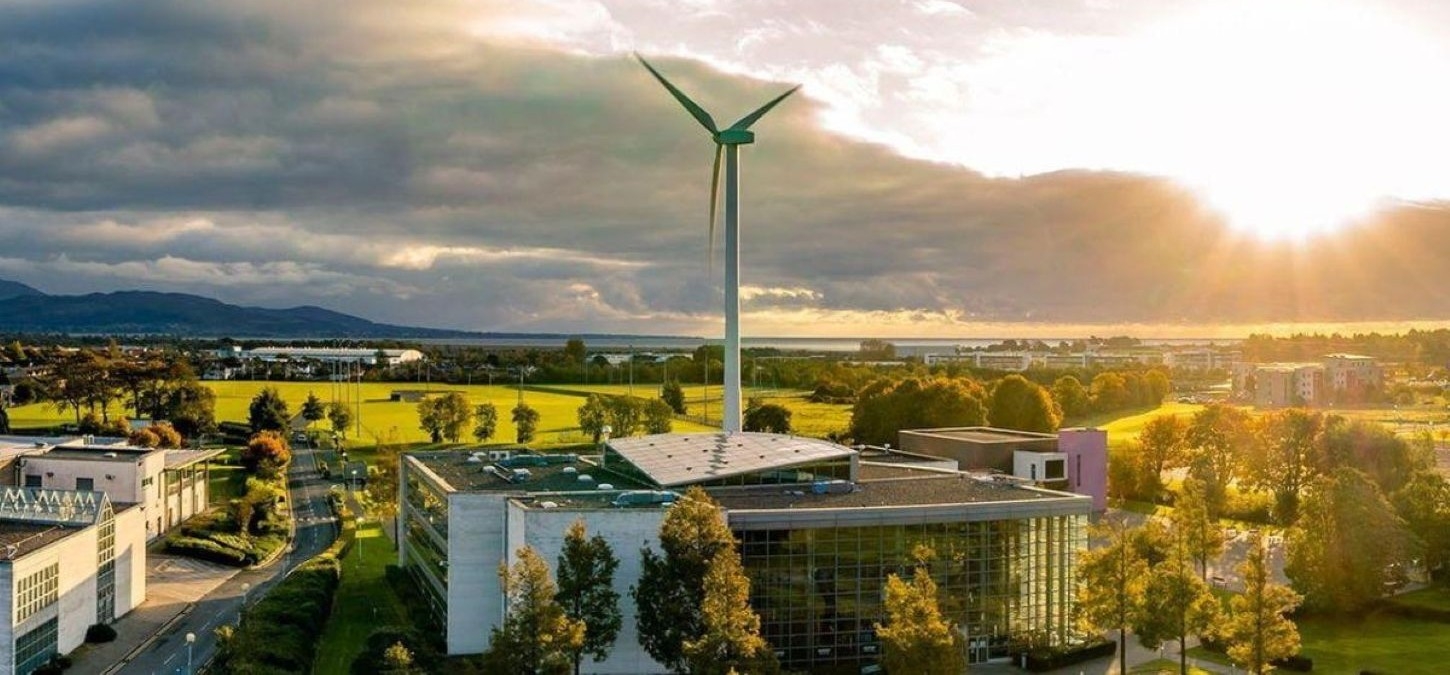
Environ 2026, the 36th Irish Environmental Researchers' Colloquium, was hosted at Dundalk Institute of Technology (DkIT) from 27th–29th April 2026. Organised jointly by the Environmental Sciences Association of Ireland (ESAI) and DkIT, the conference welcomed more than 250 delegates from across Ireland and further afield. As Ireland's premier environmental research conference, Environ provides a high-profile platform for both emerging and established researchers to present their work to audiences from academia, government agencies, industry, and the wider environmental sector.

The theme of Environ 2026, "Habits and Habitats: Adapting Sustainable Practices for Environmental Protection," reflected the growing need to bridge environmental knowledge and practical action. The theme aligned closely with DkIT's research strengths in sustainable water management, climate adaptation, biodiversity conservation, nature-based solutions, renewable energy, environmental governance, circular bioeconomy, sustainable agriculture, and emerging contaminants. Throughout the three-day event, delegates explored how sustainable practices can be adapted and implemented to address contemporary environmental challenges. Please click here for the full conference handbook.
The conference commenced on Monday, 27 April, with a series of workshops and engagement activities designed to provide practical learning opportunities for delegates. Participants could choose between a workshop on Climate Resources and Services for Environmental Researchers and a Bioinformatics Tools Workshop focusing on phylogenetics and sequence processing. Afternoon activities included a guided tour of DkIT's wind turbine and its history, alongside a workshop exploring the applications of Artificial Intelligence and Natural Language Processing in environmental research.
Monday evening featured the national launch of Meadow Magic, a short film-based biodiversity initiative aimed at engaging young people in nature conservation. The launch was followed by a lively and thought-provoking panel discussion on biodiversity initiatives and environmental education. Chaired by Chaired by Prof Frances Lucy, ATU Lead for EU GREEN University Alliance, the panel brought together Aoibhéann McCann, actor and writer; Dr Noeleen Smyth of University College Dublin; Collie Ennis of Trinity College Dublin; and Paddy C. Courtney, actor, writer and vegetable grower. Their discussion highlighted the importance of public engagement, storytelling, and education in supporting biodiversity conservation efforts. If you would like to watch the shot film please click here.
The formal conference programme began on Tuesday morning with welcome addresses from Dr Diarmuid O'Callaghan, President of DkIT; Dr Orla Lynch, DkIT Research Manager; Dr Edel Healy, Head of the School of Health and Science; Dr Siobhan Jordan, Head of the Department of Agriculture, Food and Animal Health; and Dr Suzanne Linnane, Director of the Centre for Freshwater and Environmental Studies (CFES). Delegates were also welcomed by conference convenors Dr Sarah Murnaghan and Dr Hammond Antwi Sarpong, together with ESAI Chairperson Dr Niamh Power.
The opening keynote addresses were delivered by Dr Brian MacSharry, Head of the Group on Nature and Biodiversity at the European Environment Agency, and Dr Darragh O'Neill, Senior Manager for Research Strategy at the Environmental Protection Agency. Their presentations provided valuable insights into current environmental policy, biodiversity protection, and the strategic research priorities required to address future environmental challenges.
Over the following two days, delegates participated in a diverse programme of parallel sessions that reflected the breadth and interdisciplinary nature of contemporary environmental research. Topics included Climate Change Mitigation and Adaptation; Circular Bioeconomy, Waste Management and Bioenergy; Environmental Monitoring and Remediation; Biodiversity Conservation and Ecosystem Restoration; Microplastics and Emerging Contaminants; Agri-Environmental Management; Artificial Intelligence, Machine Learning and Modelling in Environmental Science; Environmental Education, Policy and Governance; Marine and Coastal Environments; Sustainable Water Management and Conservation; and Advances in Renewable and Sustainable Energy Technologies.
The conference showcased research from 90 oral presenters, including a dedicated programme of five-minute presentations from early-career researchers. These sessions provided an opportunity for emerging scientists to communicate their work to a broad audience while receiving valuable feedback from peers and experienced researchers. Poster presentations formed another important component of the programme, with approximately 40 posters displayed during dedicated networking sessions. These sessions encouraged discussion, collaboration, and the exchange of ideas among delegates from a wide range of disciplines and sectors.
The second day concluded with the conference gala dinner at the Gateway Hotel Dundalk, where delegates enjoyed an evening of networking, celebration, music, and dancing. The event provided an opportunity for attendees to strengthen professional connections and continue discussions in a more informal setting.
The final day of the conference began with an inspiring presentation by environmental education specialist Dr Caroline Gilleran Stephens of the Centre for Freshwater and Environmental Studies at DkIT. This was followed by presentations from Dr Bernard Drumm and Dr Sinéad Loughran of DkIT Virtual Labs, who demonstrated innovative approaches to virtual learning and highlighted the role of digital technologies in education and training. The conference then continued with further oral presentations and poster sessions before concluding with the student awards ceremony.
The awards ceremony recognised excellence in environmental research and science communication, celebrating outstanding oral and poster presentations from students and early-career researchers. The conference concluded on a high note, highlighting the quality, diversity, and impact of environmental research being undertaken across Ireland and internationally.
ESAI and DkIT would like to thank all delegates, presenters, keynote speakers, sponsors, exhibitors, volunteers, and members of the organising committee whose contributions made Environ 2026 such a successful event. The conference once again demonstrated the strength of Ireland's environmental research community and its commitment to developing evidence-based solutions to environmental challenges.
At the closing ceremony, it was announced that the University of Limerick will host Environ 2027, which will take place from 24th–26th May 2027. The ESAI looks forward to continuing this tradition of collaboration, innovation, and environmental excellence at next year's conference.



This event has CPD Approval from:


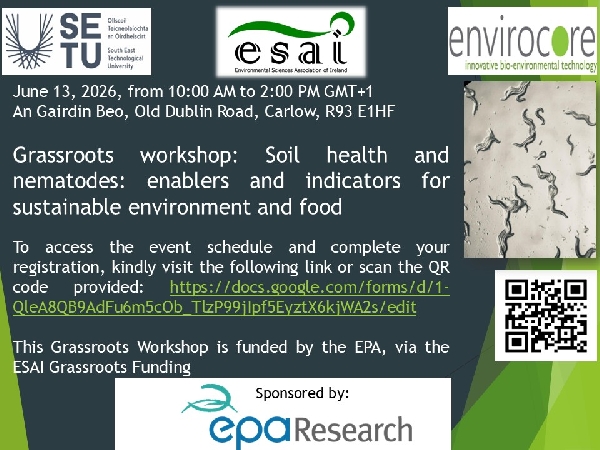
Soil health and nematodes: enabler and indicators for sustainable environment and food. ...
Read More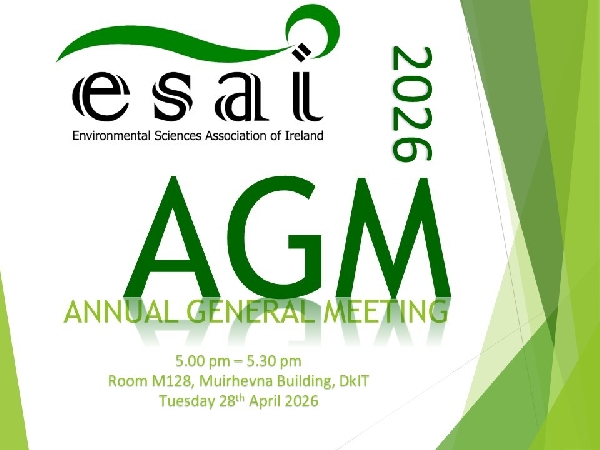
The AGM of the ESAI will be held during our annual conference Environ 2026 in Dundalk Institute of Technology Date: &n...
Read More